Thursday, October 2, 2014

SJWG at the Collingswood Book Festival


This year the Collingswood Book Festival will be held on Saturday, October 11th, 2014, from 10 AM to 4 PM on Haddon Avenue in Collingswood NJ.

Join us on Saturday, October 11th when festival-goers will have an opportunity to stroll more than six blocks of Haddon Avenue filled with nationally recognized authors and speakers for adults and children, as well as booksellers, storytellers, poetry readings, workshops, exhibitors, kid-friendly activities, and entertainment for all ages. This award-winning festival is the longest-running, largest literary event in the Delaware Valley. Remember, all events are free!

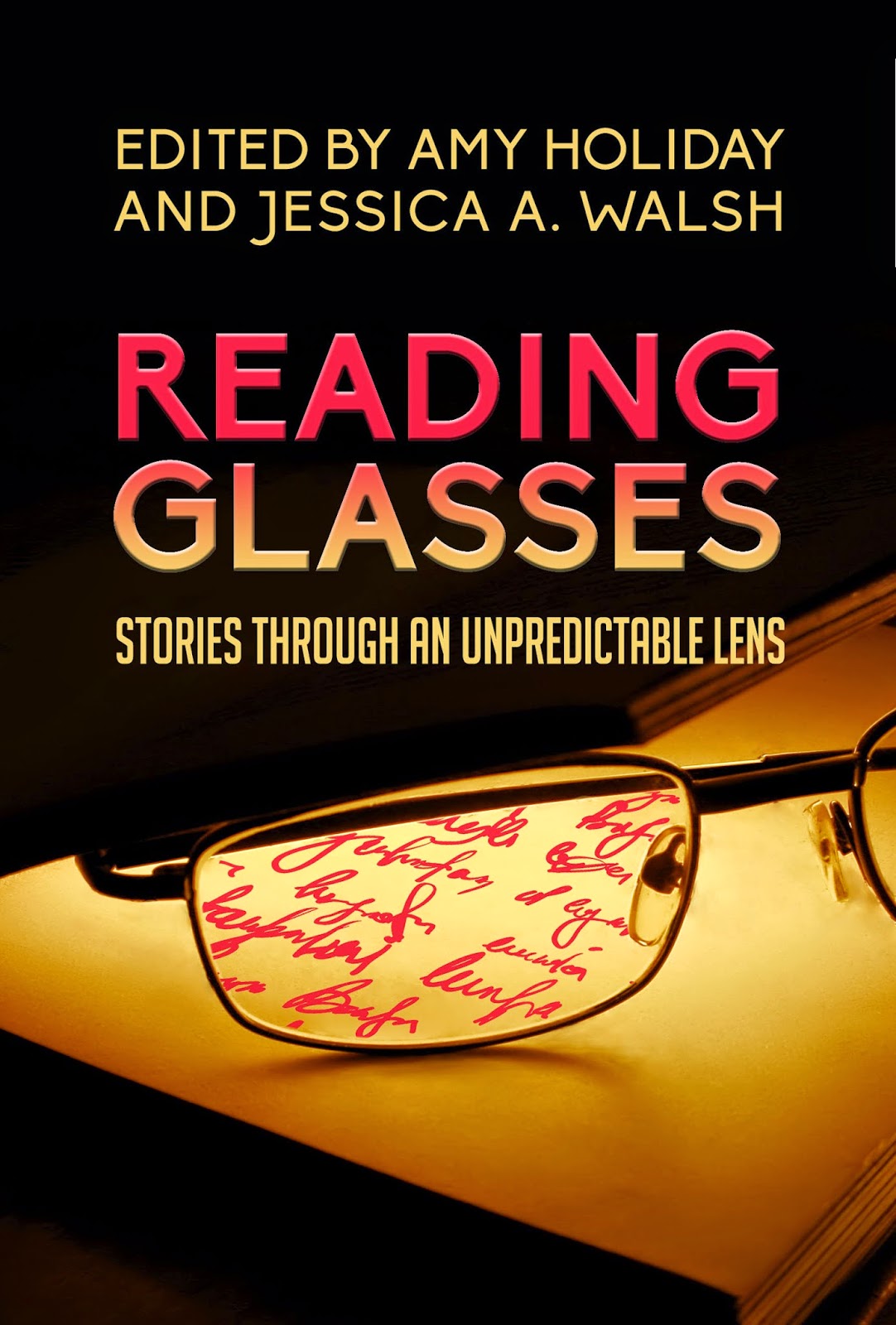
The South Jersey Writers' Group will have a table at the Festival where we'll be selling both of our anthologies - Tall Tales and Short Stories from South Jersey and the brand new Reading Glasses: Stories Through an Unpredictable Lens.

Come on out and enjoy the biggest literary event in the area, check out all the fun, but make sure to come by our table, meet our members, and see what we have to offer. There'll be guest speakers, readings, storytelling sessions, seminars, panels, fun activities for the kids, music, giveaways, food trucks (writers and readers gotta eat), and all the great stuff that has made the Collingswood Book Festival the event of the year for over a decade. Click here for the official schedule.

The Collingswood Book festival is a great place to meet and talk writing, check out our books, and find out more about the South Jersey Writers' Group face to face. Come on out, we can't wait to meet you.

Monday, September 22, 2014

Banned Books Week Read Out


Come join us celebrate our freedom to read! The South Jersey Writers’ Group is holding a banned books read out at the Cherry Hill Public Library, 1100 Kings Highway North in Cherry Hill, NJ, on Saturday, Sept. 27 from 2 – 4 pm. We'll be in the tiled area on the lower level under the grand staircase.

“As writers, we have each read a book that inspired us to pursue our craft,” says Mieke Zamora-Mackay, event organizer.  “It’s quite likely that very book has been challenged for removal from a public or school library, summer or school reading list.  Imagine if that book wasn’t available to you then?  We’re encouraging everyone to bring a banned book with them and read it in public!”

Through the years, many titles have been challenged for a myriad of reasons.  Please follow this link to view a list of the most challenged books from 2001 to the present.
 
Banned Books Week is an annual event celebrating the freedom to read.  Typically held during the last week in September, it highlights the value of free and open access to information.  Banned Books Week brings together the entire book community – librarians, booksellers, publishers, teachers, journalists, and readers of all types – in shared support of the freedom to seek and express ideas, even those considered unorthodox or unpopular.

Begun in 1982, Banned Books Week reminds Americans not to take the freedom to read for granted.  Since 1990, the American Library Association’s Office for Intellectual Freedom has received reports of 9,500 attempts to remove books deemed by some as inappropriate.

Friday, July 11, 2014

Who Uses Outlines?


I was recently asked about my writing process. Do I use outlines? Do you plot a story or just make it up as you go along? Please keep in mind that what works for one person might not ever work for anyone else or even that one person ever again except that one time.

For my most recent title, Connecting Flight, here’s what happened:

In mid November, 2011, a plane carrying two coaches of the Oklahoma State women’s basketball team crashed. After seeing the story on the news, I wondered about the last moments of the two coaches, one male and one female. I wondered what might go through the minds of people on a plane that is plummeting to earth and death is certain or at least likely. What do people think about? What do they do or say? Did they pray, cry, scream, or something else? And then I settled on what I would likely say. “I’m not ready to die. I’m not ready to die.”

And then I wondered about that proverbial light we’re supposed to see upon death, and I wondered what would happen if I or they were truly not ready to die. What if they refused to go into that good light? What if they just wandered away? And what if they lived (no pun intended) up to that ghost theory that some spirits are here because of “unfinished business”? What if?

I had the beginning of a story, but I couldn’t use the basketball coaches because that would be wrong. So I did what most writers do – I put myself into it. I made the male ghost an uptight math teacher. I needed the female to be different, so she at first she was a rather uneducated, stay-at-home wife. However, after going through several drafts, I eventually realized that she needed something in her past to haunt her. (Again, no pun intended.) She eventually became a model/actress. Then she became a model/actress of the kind with very little clothing. That was because she needed to have something in her past to hide and something to make her resist going to “heaven” because of a fear of being rejected based on that past. There’s more to it than that, but it’s enough for now.


I had people. I needed reasons. They are both on a plane together going from Philadelphia to Los Angeles. He is going to spy on his wife whom he thinks is having an affair. She is going on business, another “modeling” job, so to speak. She also suspects her husband is having an affair, but he has provided her with a great amount of wealth and material things that she shares a good deal with her less-fortunate family, so she quietly takes one for the team.  No pun intended.  I had a connection between them - both suspected their spouses of cheating.

But that’s not important right now. What’s important is the process. What I first did was treat the story as I always do – like a movie. I write outlines and, unlike some writers, I cannot work without one. Mine begins with a setting followed by the important events that should happen in that scene/chapter. Here are the first three scenes/chapters in the outline:

1. Philly airport
    a. Ann and Chris, nervous, getting on plane, Philly airport,
    b. neither happy, notice each other, assume fear of flying
    c. small talk, both hinting but hiding something,
    d. turbulence, distracted, notice wedding rings
    e. Plane going down, people freaking, ann and Chris hold hands tightly, repeating “I’m not ready to die”            intensity so great they can’t let go, plane hits, all goes dark

2. Airport runway or wreckage site
   a. smoke clearing, EMT all around, blood, wreckage, triage, yelling.
   b. Ann and Chris looking in disbelief, sounds muffled in and out, vision blurry at times
   c. They’re perfectly clean, most others are a mess
   d. Both know something is wrong, not sure what, see a few others like them
   e. Some others walking away, looking back at them, waving for them to follow
   f. Still holding hands, pull apart, big Zap! Touch again, painful Zap keeps them away
   g. Ball of bright light, others going in, Ann and Chris refuse
   h. See man crying, bloody, next to lifeless body of wife, kids too
   i. Leave area, run quickly, not looking, ambulance goes through them.

3. Random places away from crash site
   a. Panicking, crying, debating what to do, to go into the light or not
   b. Agree they not finished on earth, things to do still
   c. Discuss movies, ghost clues, rules, what they can and can’t do?
   d. Ann tells him to be more of a “man” when he cries. He admits he’s not.
   e. Do we eat? Sleep? Piss? Guess we’ll find out.
   f. Where did others go? why didn’t we go? people say spirits don’t know they're dead
   g. But we know. But we not ready? Tired. Do we sleep? Mental detox.


This is not exactly how the story went, but it was the first, maybe second version of an outline. Although the original outline only had 14 chapters, I eventually ended up with 18. I always print my outlines so that I can keep them in front of me on the desk as I type. I constantly check each line to make sure I’m going in order, although there’s always room for changes and improvising. I also print the outlines because I like the visual of crossing off numbers and letters as I write. It helps give me a sense of progress and accomplishment. Another part of my process is basically "watching a movie." When I type, I imagine that I'm watching a movie in my head, and I am simply writing what I am watching. It allows me to write a lot in a short period of time, but it does have drawbacks, such as a drifting point of view and too much dialogue. Oh well. That's what revising is for.

So, the crash was in November of 2011. I had an outline finished by January of 2012. Normally an outline doesn’t take that long, but I was still teaching then and didn’t have a great deal of time to work on it. However, as January began, I knew that I was about to leave the profession, so that motivated me to work more quickly and enjoyably on the outline.

I started typing the first draft somewhere around February 1, 2012, and I finished that somewhere about the first week of March. It was right about then that I started working more at blogging, having just gotten my first few followers. That’s when I first started posting chapters as blog posts for feedback. There were some incredibly nice people who seemed to be reading and greatly enjoying the chapters. Not a lot of critical feedback, but a lot of polite praise. A few people even tweeted out my chapters for others to read, and I was gaining more and more blog followers. It was nice.


Somewhere in June of 2012 I began revising. The story was too short and the ending was too easy. I had rushed it and nobody was interested in the queries I had e-mailed.  I knew I had work to do and spent the summer revising heavily. But that’s when I was really starting to enjoy the blog following that was growing. Between chapters, I was writing humor, essays, posting photography, and I had also gotten hooked on the flash fiction thing. Writing and revising were pushed aside, far aside. I had an audience to feed, and it felt nice.

I won’t recount that episode because I have already spelled it out in Writing 2.0, which brought me back to writing fiction. It had been a year since I originally wrote the story, and it wasn’t going anywhere, and neither was I. That’s when I did two things at once:

1. Revised the chapters a second time in the form of a third draft.

2. I posted the new chapters for a new audience who immediately helped me revise it further for a fourth draft. It grew from 18 chapters and 50,000 words to 25 chapters and 76,000 words in about six weeks, and I could not have done any of it without an outline.

In January of 2014 it was accepted by a small print, Whiskey Creek Press, and was set to be released in July. However, Whiskey Creek was sold to Start Publishing, a small company that has bought up a handful of small presses and is in the process of re-prioritizing their publishing schedule. So I have no idea when it might actually be released. But that's now what we're here for today.


One last example of the benefits of outlining is the currently outline I am writing, which includes the page above.  It's a time travel story, and my outline was written out to 20 chapters.  Although I felt ready to start the first draft, I still followed my process of typing the outline.  A fortunate choice because, while typing it out, I realized there were several holes in my story's timeline.  It's a time travel story, and there are going to be continuity issues.  While typing, I realized that I had the wrong target year in the past for my character to visit.  Once I changed that one element, I realized the domino effect waiting to happen and then had several other necessary changes.

Had I started the first draft without typing the outline, I likely would have written thousands of words that would have eventually been scrapped.  Another good reason to outline - revisiting your story and making sure your story is going to hold water.  Or beer.  Do yourself a favor and try an outline.  It's like revising but a lot shorter, and I could save your character from ending up in 1993 instead of 1990.  I don't even want to think about how embarrassing that could have been.

How about you? Do you use outlines?

_____________________________________

Tuesday, July 8, 2014

Words in My Head by Zhäriya' Amani


By Kahlil Weston

I want to announce my publishing company called Mad Writer Publishing. It's a company that I founded and I'm assembling a roster and staff. If you're interested in bringing out a book, you can reach me at @KahlilDelgado on Twitter or you can contact Kahlil Weston or the president of my company Johnnie Thomas El on Facebook. Tracy Clark is the COO to my company and has a subsidiary division called "The Clark Administration" Publishing. My publishing logo exemplifies the personality of the company.

Zhäriya' Amani's book, Words in My Head, is officially live. All those interested, holla at your boy or Johnnie Thomas El or Zhäriya' Beautiful Jones. Thanks to Eric Jackson for the help with the cover. Whoever wants to have a book published come and see me.

Zhäriya' Amani is a very talented tenth grader who has been writing for three years. She's been published in Stars in Our Heart: Symbols by Word Poetry Movement, and is a resident of Camden NJ. The book, Words in My Head, is a compilation of eighteen select pieces from the poet. Cover design by Kahlil Weston and Eric Jackson. It can be purchased at Amazon here.

A launch party for the book will be held at St. Paul's Episcopal Church in Camden NJ on Saturday, July 12th, from 6:30 PM to 10:30 PM. Come out and show your support! $10 for admission and food, $15 for admission, food, and an autographed book. There will be food, drinks, great music, raffles, special performances, a sneak-peak, and plenty of copies there to buy!

About today's guest-blogger:

Kahlil Weston has authored three books (all mature content), "
The Kahlil Weston Hour," "The Wes Daddy Mack Hour," and "The Young and the Wesless" "I consider myself a different breed of a writer. I wrote with no rules and everything within my realm is fair game. When I have a bone to pick I consider myself a battle writer. I have started my own publishing company called Mad Writer Publishing. My goal with my publishing company is to publish books for writers whose last name isn't Weston."

Friday, June 27, 2014

A Contract with the Reader

(This post was featured as "Freshly Pressed" by WordPress in March, 2013)


When I took a graduate class called “Writing the Novel” a few years ago, I learned two very important things. First, if you tell a woman that she’s writing a romance novel when she thinks she’s writing literary fiction, be prepared to see a chair fly across the room. Second, there’s something called “A Contract with the Reader.” Let’s forget about throwing chairs for a while and focus on the contract, which was something I had never heard of before.

Let’s pretend you’re in a bar and a guy sitting to your left says, “You want to hear a story?” Of course you don’t, but you say, “Sure. Thrill me.” He knows sarcasm, so he says, “Tell you what. If I give you a four-sentence setup, and you agree that you’re interested in hearing the rest, then you owe me a beer. How’s that?” So of course, you say, “Sure. Thrill me.” So he says:

A lonely, 13-year old boy lives with his single mom in a trailer park and has a quiet place in the woods nearby where he feels safe from everyone else. One afternoon, when his mom is working late, he goes to his place in the woods where he falls asleep until dark. He wakes frightened from an incredibly strange dream and starts walking home. Usually he snaps his fingers to break the silence because he’s afraid of the dark, but when he snaps his fingers this night, a painless but warm, candle-like flame comes from the end of his finger.

I don’t know about you, but those four sentences would have cost me at least one beer or as many as it would take for him to tell me the rest of the story, mainly because it begs for questions. What was the dream about? Was it really a dream? What is producing the flames? How is the dream connected to the flames? What will he do now? Is it like a super power? Why is he lonely? What kind of kid is he? How will this change him? Questions are important. Without wanting to know more, there's not reason to continue reading. That's why I like to end my chapters with little teases. Yeah, I'm a tease.

To be clear, that setup was written by another student in the same graduate class as the chair-throwing romance writer. Would love to take credit for it, but I can’t.

The storyteller in the bar has just created a contract, and I am the reader. He has said to me, “If you’re willing to hang in there for about 80,000 words, I promise I will deliver a story that explains everything.” As the reader, I have the ability to accept the agreement, which means read the story, or not accept, which means I keep browsing the shelves or wait for another guy to show up on the barstool on the right who might have a better story.

Sometimes we accept the contract that turns out to be worth every penny. Whether it was 2000 pennies for the book or the beer doesn’t matter, as long as you get a story that delivers on its promise. Sometimes we accept the contract, but the story doesn’t deliver. Even if you wanted, you won’t get your money back. Worse than that, you won’t get the time back either. Those 75,000 words are stuck in your head, and you will probably search right away for another story to wash the memories away. It was a bad contract and should never have been offered to you, but there’s no way you could have known without someone having warned you. You don’t usually get that in books or movies, but it sure is needed.

One of my favorite examples of a bad contract is Secret Window with Johnny Depp, based on a story by Stephen King. It’s got a four-sentence setup that’s so good you would be willing to buy the guy on your left a case of beer if the story worked out. If you don’t know the story, the setup would go like this:

Mort Rainey, a successful writer who recently split with his wife, retreats to a lakeside cabin to work on his next book but gets a mysterious visitor. John Shooter, an angry man from Mississippi, insists that Mort has plagiarized his short story. Although a typed copy of the man’s story is nearly word for word with the version Mort had published, Mort has printed proof that he wrote the story first. Mort tries to ignore the man and hopes he’ll go away, but bad things start happening, like a house burning down, friends getting killed, and each bad thing gets closer and closer to Mort.

Sounds like a pretty good setup, right? Begging for questions? How did they write the same story without knowing each other? Who really wrote it first? Is there some way one could have accidentally gotten it from the other? How far will this stranger go in tormenting Mort?

You, like me, would probably have been okay with buying a few beers, maybe even a case, if the guy on the barstool would give you a good 70 or 75,000 words and bring it all together. However, this is a contract you should not sign. And if you haven’t seen the movie and don’t want to know the rest, you should stop after the next paragraph.

Secret Window is an excellent example of a broken contract. The stranger, John Shooter, convinces both himself and the audience that Mort stole his story, and the consequences to Mort’s refusal are swift and strong. Both the local sheriff and Mort’s lawyer investigate, and more lives are threatened and lost. When Mort confronts his ex-wife’s new boyfriend about his involvement, he learns that the boyfriend stems from a town in Tennessee called Shooters Bay. The coincidences grow, as do the close calls, some of which are deadly. Wanna know how it ends?


Split personality. John Shooter is really some kind of stupid alter-ego of Mort. We’re supposed to believe that the divorce had shaken Mort so much that he developed another personality that turned around to terrorize himself. Apparently, when we hear Shooter talk to Mort on the phone, the voice is imaginary – I guess. Oh, they did some interesting things to plant clues, such as when Mort thinks shooter has broken into his house and, when Mort thinks he’s about to clobber him with a bat, it turns out to be a mirror. That’s supposed to be a clever way of foreshadowing that Mort is really Shooter, but it’s kind of lame. The only thing more lame would have been if it had all been a dream. That's the worst ever. Or maybe the "deus ex machina" is worse, when an unseen force, usually referred to as "the hand of God," reaches down and saves the day. For that, you might check out Stephen King's The Stand, in which after hundreds of pages and a final standoff between the good guys and Satan in a denim jacket, nuclear missiles are launched, only to be saved by a "mysterious" hand that rendered them harmless.

It is an unfair and misleading contract, and it is something you should consider when you are writing a story. What exactly are you offering the reader? Imagine you are the guy on the barstool to my left. Thrill me. Set up a story that makes me want to buy you a beer, and I will gladly listen to all 80,000 words. However, you better bring it all together with a resolution that takes every loose end and ties them all into neat bows as if it’s my birthday present. If you don’t, you might want to head for the door when my last beer bottle is just about finished because, like that woman with the chair in my graduate class, I just might tomahawk an empty one in your direction. So watch your back.

Friday, June 20, 2014

Finding your writing "voice"

by Rich Voza


One of the greatest compliments I have ever received was from a colleague who had just read one of my sarcastic emails sent to inform the rest of the staff about something unimportant.

     Sue: “You will never get away with sending an anonymous letter.”

     Me: “Whaddya mean?”

     Sue: “Because I don’t even have to look at who these stupid emails are from.
              I can just read them and know they’re from you.”

     Me: “Thanks. I think. Right?”

     Sue: “Right.”

It was a way of knowing I had reached, found, or created my writing “voice.” It’s one of those intangible things that is very difficult to teach and not everyone can learn. If you ever read an agent’s website to find out what kind of material they’re looking for, you’ll often see they want writers with a “strong voice.” Some writers will read that and ask two things.
 
     What the hell is a “voice”?
     How the hell do I get one?

The short answer to #2 is “time,” but I’ll expand on that later. The clinical answer to #1 is “sentences and thoughts using an identifiable style, often formed with certain sentence structures, word choices, types of humor, genre, subject matter, or another consistent characteristic.” This might not be easy to explain, but I’ll give it a shot.

If I fast forward to the middle of a Spielberg movie or a Springsteen song and hit “play,” it’ll only take a dozen or so seconds for me to know who is responsible. I wouldn’t be able to explain how or why I would know, but I would know. With Spielberg, there’s something about the balance of sound, the close-ups during dialogue, even the way the camera pans. With Springsteen, it’s his signature sound from his Fender guitar, although there’s no mistaking any of his songs once he starts singing.


This “voice” thing also works if I flip to the middle and start reading most any book by Stephen King. If you ask me or anyone, “But how do you really know?” sometimes the answer might be “I just know.” BTW - I hate that answer, but it’s the only one I have. Feel free to leave your own explanation, and feel free to tell me that mine makes no sense. I won’t disagree. What we might disagree on is how each of us can arrive at our own “voice.” In a way, your writing “voice” is similar to your real “voice.” Follow me on this extended analogy.

Most people dislike leaving a job and becoming the “new guy” at a different job. I hate it, that’s for sure, for more than one reason. First is the obvious – that you had just been fired or laid off or something like that. Second is the annoying – there’s too much to deal with, such as new names, new procedures, navigating the layout of the building, being extra polite around others, and the pressure of doing great work because you’re the new guy. It takes a while before you can get comfortable and start expressing yourself as you did at your previous job, the one you had for about 7 years. If you think about it, chances are it took you a while to get comfortable there, right?

In most cases, if you’re new, don’t speak out. Become a ghost. Don’t do anything to stand out. Shut up, blend in, and nod in agreement at all times. Don’t express yourself. If you don’t like what they’re putting in the coffee machine, smile and learn to like it. Work. Work more. It’s your job, so work. Slowly, you will see better ways to do things. You will make little changes that save time. You will see better, more efficient ways of doing things. You will make personal touches, improvements, and others will notice. Let your performance dictate “who” you are, and then you can stretch your legs a little bit.

Others might ask what you are doing because your hard work is getting noticed. They might even ask for tips or suggestions so they can try some of what you are doing. You will be flattered, but you will also be a little annoyed. You will want to tell them to go figure out their own personal touches instead of borrowing yours, but you will also feel good that others like your innovations, so you won’t mind if they copy a little.

Eventually others will see your work results – without your name on it – and know it is yours because they have learned your style, your voice, your unique way of doing things. It takes work to get there.

No writer has a voice when they start out. If you are writing short stories, it might take 10 before you begin to feel your voice. It might take three novels. It comes down to writing, writing more, not liking what you have written, rewriting, revising, and writing some more. If writing is new for you and someone’s writing advice is to develop your voice, ask them how they developed theirs. If they don’t know, then ask how you are supposed to follow advice from people who can’t explain their own advice. The reason I push this is because I love people who give advice that they themselves don’t fully understand. Many people will say “show, don’t tell” and “find your voice,” but those suggestions are worthless without explaining how to actually do it.


Finding and having a writing voice is pretty much finding and having a comfort level. It comes with time spent writing but also reading. Think of, or find a favorite author, and try to nail down what you like about that author’s work. It might lie in the voice. Two of my favorite authors are David McCullough and King.  I’m not really a fan of most of King’s stories because of the endings, but his writing voice is fabulous. His sentences are lessons because he writes with what I call “necessity.” He doesn’t waste time with a characters hair and eye color, height or weight, favorite foods, or any of that stuff – not unless it’s vital to the story.

I recently read his short story called “Mile 81,” about an abandoned highway rest stop at which about a dozen people arrive at but only about three of them leave alive.  There were a few cops, two parents, a horse trainer, a handful of kids ranging from about 3 to about 12, and a few other people.  I can recall a physical description of only the horse trainer, a hefty woman. King knows his job is to provide us with action, not pictures. If he provides the action, then readers will provide their own pictures. For more thoughts about that, you can read this recent post.

As for your own “voice,” it comes with three things: time, practice, and honesty. That means learning to write like "you" instead of trying to write like someone else.  Voice comes from writing, not liking what you have written, and writing some more until you start to like what you're writing.  A female friend blogs often, and she is not shy about using profanity or writing about topics that would not be discussed in front of children.  She often uses short, deliberate, sometimes incomplete sentences that cut right to the veins instead of slowly peeling layers of skin.  To read her writing is like jumping onto a moving roller coaster as it slows around a curve.  It is an unusual style, but it is clearly a voice she is comfortable with.

When I used to coach a school baseball team, the infielders would shy away from groundballs for fear of getting hit in the face or chest. I would tell the kids this great lie. “Look, no matter what you do, you’re going to get hit five times this season. So just let yourself get hit and get those five out of the way now. Then you won't get hit anymore.” The same goes with your writing voice. It’s a certain amount of words, chapters, or stories away. For you, it might be six short stories, and for someone else maybe it’s two novels. However far away it is, just start writing now because the more you write, the sooner you will get there. There are no road signs, but you will know when you have arrived.


Wednesday, June 4, 2014

Update on SJWG’s Next Anthology

By Marie Gilbert

I had a chance to ask editors Amy Hollinger and Jessica Walsh about the new book our South Jersey Writers' Group is working on. Here is what they had to say. Marie Gilbert: Amy, I know that you and Jessica have been very busy working on the South Jersey Writers’ Group’s next anthology. Are there any tidbits you two ladies for like to share about this venture before the book’s release?

Amy Hollinger: "I learned a lot about how to run a Kickstarter fundraising campaign! Next time, we'll start with the stories and then raise the money to finish the book! For Reading Glasses, the stories are a bit longer than most of the short stories we published in Tall Tales and Short Stories from South Jersey. Editing longer stories has a different challenge in that action takes a bit longer to build, but the writing still needs to be tight and every action or event still needs to matter to the overall plot.

"Also, the book publishing process is lengthy in itself, and rushing it--especially when it comes to editing--is going to result in a poorer quality book. Selecting stories for this collection was different in that we tried to align our choices on a theme."

Jessica Walsh: "It's been a really great experience so far, although I think we may have underestimated the time it would take with the stories being longer and the editing requiring several rounds. The Kickstarter campaign was very exciting and it's been great being involved from the very beginning; fundraising, the call for submissions, story selection, and now editing. I am very excited for publication, and I think people are really going to enjoy the stories we've chosen for the anthology."

Marie: How many stories are included in this anthology?

Amy: "Twelve stories, at the moment. Subject to change pending authors' final review of stories and contracts!"

Marie: What types of stories can the reader expect to find in the book?

Jessica: "The stories are all fiction; speculative fiction to be more specific, so the stories are more fantastical/sci-fi/stretched imagination. The stories take place in varying times (present/future/FAR in the future) and locations (the shore, a childhood home in the south, a spaceship). Although all quite different, the common theme is what makes them all work so well together as a collection. I can't wait to tackle putting them in order!"

Marie: How did you decide on the title, Reading Glasses: Stories Through an Unpredictable Lens?

Jessica: "It was really kind of a fortunate accident on one of the author's parts. He apparently had renamed his story "Ghostwriter" when submitting, but forgot to rename the title in his attachment, which was "Reading Glasses." Amy and I both loved the story and thought it worked very well as sort of a 'feature' story; a great representation of the collection and the spirit of writing. We actually thought the initial title, "Reading Glasses" worked better, so Amy contacted the author and asked him if he would consider changing the name back and if he would allow us the use of the title for the title of the anthology. He was happy to oblige."

Marie: What was the process of picking the cover art? Did you have several ideas?

Amy: "I had an idea for something very simple, with just a pair of glasses on the cover. but our designer, Shelley Szajner, incorporated the glasses and took it way beyond my expectations! We had a little discussion on the cover, but one was a clear standout. A few tweaks and it was perfect! The art and the concept go perfectly with the dark feel of the story."

Marie: Have you’ve come across a story, that one of you liked, but the other didn’t, and how did you both decide if that submission stayed?

Amy: "We were unanimous on several of the stories. Let's just say, you can tell the difference between a polished story that has been through several revisions and had several test readers, and a story that has not gone through that process! But we did choose a few based on concept, and discussed how the story could be made better, whether through tightening the writing or restructuring the action.

"We chose the sci-fi genre early on (based on a few standout submissions), although we accepted stories in literary fiction, YA, and memoir also. Towards the end, we received some excellent literary submissions as well, so we essentially created two book lineups, and debated the pros and cons of each. Speculative fiction won out, mostly because we had an early decision in the backs of our minds. Let that be a lesson to writers: Don't wait to submit; early consideration can make a difference!"

Jessica: "Amy's right, some stories just really stood out above the rest or just had a really good concept and we just hoped that the author would work with us. So far, they've all been very responsive to our feedback. There was one story that I threatened resignation over if Amy didn't approve, but fortunately, she really liked the story too, ha ha. The challenge was when we loved a story that didn't fit the theme. We discussed ways that we could "maybe" make it fit, but in the end we had to ensure every story fit the genre we selected properly. We could always do another anthology!"

Marie: When should we expect to see the book?

Amy: "We are aiming for July publication; no final date just yet. Again pending final edits!" Thank you Amy and Jessica for the update and I’m sure all our readers are anxiously awaiting the South Jersey Writers' Group’s next book. And for all you readers out there, keep your eyes open for the announcement of SJWG’s big book launch of Reading Glasses: Stories Through an Unpredictable Lens.

The above is a revised version of an interview that originally appeared at Gilbert Curiosities that you can read here.  Since the interview, Reading Glasses has received a new release date of August 19, 2014.